What Is the Difference Between Broadcasting and Streaming?
Broadcasting is the traditional one-to-many transmission and distribution of audio and audiovisual content via radio, television, cable, and satellite to an audience. Streaming delivers audio and video content over the internet in real-time, via internet-protocol (IP) networks, to connected devices. This allows users to watch or listen to the content without downloading the media.
Broadcasting uses traditional infrastructure, such as transmission towers, satellites, and licensed networks. Streaming uses encoders, a content delivery network (CDN), and internet bandwidth. It is not considered a traditional broadcast.
The main difference between broadcasting and streaming is that broadcasting delivery is a one-way transmission that reaches the audience simultaneously. Streaming can be an on-demand or live streaming transmission that is one-to-one via an internet-based delivery.
How Broadcasting Works
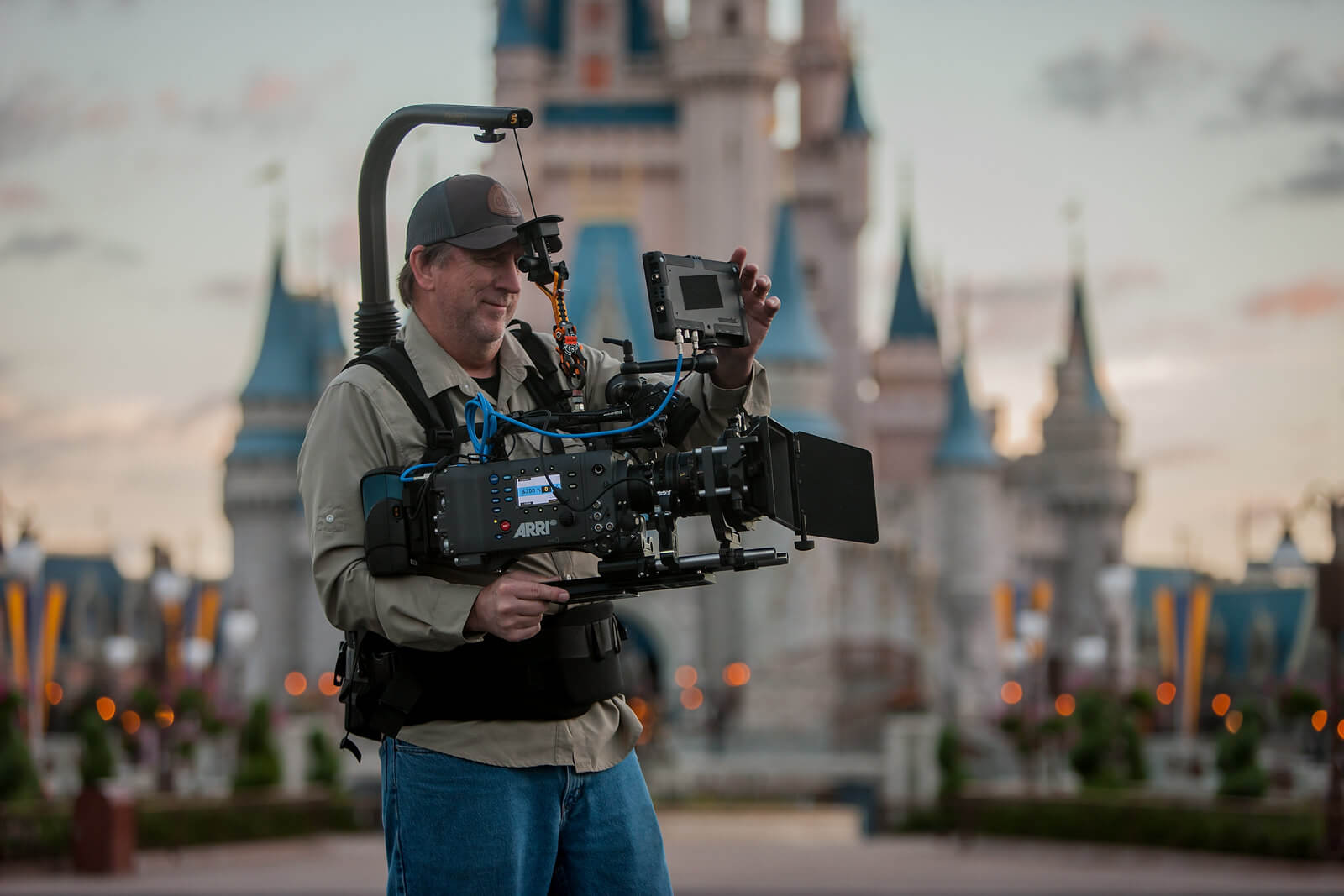
Broadcasting works by capturing audio and visual content via television cameras in a studio or on location using a mobile broadcast truck or unit. The content is sent over airwaves, coaxial cables, or fiber optic cables to a production switcher. There a technical director will direct camera feeds and use real-time editing from the production switching station.
A production control room will monitor the multiple sources of content and select camera feeds, mix audio levels, and cue graphics for a seamless viewer experience behind the scenes. The finished, polished product is sent or transmitted from the control room to broadcasting. The feed is encoded and sent via satellite, cable, or television tower to the viewer audience as a live broadcast.
Large networks and sports events rely on broadcasting to ensure professional, reliable, high-quality coverage for events. Broadcasting ensures uninterrupted coverage with low latency and consistency in real time. The downside of broadcasting is the expense. This can be overcome with a specialized broadcasting 4k mobile unit, which combines multi-camera setups, production switchers, and transmission units in one portable system.
How Live Streaming Works
Consumer or basic live streaming works by capturing, compressing, encoding, and transmitting audio and video in real-time over the internet. To live stream, you need a microphone and camera, along with encoding software. Raw footage is captured then compressed via encoders. It is segmented into small chunks and then transmitted by IP to servers. A CDN then distributes these chunks to viewers’ devices.
The quality of consumer or basic live streaming is affected by the speed at which the data is transferred. The bitrate, or bits per second, directly affects the quality of the video. High bitrates provide high-quality, clear video. Low bitrates will cause a video to load quicker but suffer poor quality. Adaptive streaming allows for the best bitrate quality by monitoring your internet speed, device CPU, and buffer status, and adjusting the video quality on-the-fly to provide a high-quality video.
Professional or high-end streaming is a bit more complex. It can refer to live streaming or video-on-demand delivery designed to be high-quality, reliable, and engaging for viewers. It goes beyond a simple casual consumer webcam and can mimic television production standards with clear branding, smooth transitions, and multi-camera setups.
Streaming is flexible and scalable via a wide CDN that features geographically distributed servers and data centers that cache video content closer to the end user for faster delivery. Streaming also has multiple platforms for distribution, such as Amazon Prime Video, Hulu, Netflix, and YouTube TV. Streaming lowers the barriers of distribution but introduces more variabilities in the viewer experience.
Broadcasting vs Streaming for Sports Events
Sporting events are broadcast to ensure reliable, high-quality coverage to large audiences. Broadcasting allows for uninterrupted coverage, low latency, instant replay, and multi-angle coverage in real time. The downside of this system is the expense. Streaming of sports events is a new option that allows on-demand access, personalization, and flexibility for the viewer. Streaming occurs most often on mobile devices. It is cheaper but the quality varies at times.
Some outlets are turning to a combination of broadcasting and streaming with a remote integration model (REMI). This option allows for a live sports broadcast to be captured on site and transmitted via IP, fiber optic, or satellite to a central studio for production. REMI helps reduce on-site staff and equipment, increases efficiency, and allows for simultaneous multi-event production.
Broadcasting vs Streaming for Corporate and Live Events
Corporate and live events should generally be live streamed rather than broadcast to save on costs and increase visibility. Streaming allows millions of viewers globally to participate and provides for on-demand content repurposing, which works much better for live events, product launches, and corporate meetings.
Broadcasting vs Streaming for Concerts and Festivals
Traditionally, concerts and festivals have used broadcasting due to the logistical demands of these events. Many concerts have several stages requiring multiple camera angles. There is also the need for consistent and superior audio quality paired with high-quality video. The result is a curated, scripted experience.
Currently, there is a shift underway to streaming for concerts and festivals due to its flexibility and versatility. Streaming can create an immediate, raw, unscripted experience. It also allows for novel interactive features, such as offering backstage views, live chat, Q&A sessions, and social media.
Key Differences in Cost, Infrastructure, and Scalability
Broadcasting is generally viewed as much more expensive than consumer streaming due to the money invested, costly equipment, personnel, and expertise required to manage such a large operation. Also paying for specific time slots is also a large expense. Although, professional streaming can be just as expensive as broadcasting depending on the production requirements and setup.
Infrastructure Requirements
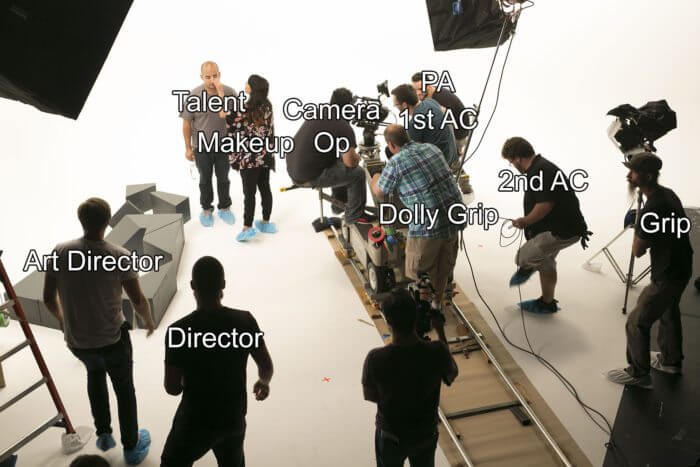
Broadcasting requires an infrastructure with experienced personnel in using high-quality audiovisual television camera equipment, monitors, audio mixing devices, and transmitters for signal delivery. A full setup requires mobile production units, staffed control rooms, dedicated satellite uplinks, and regulated transmission systems.
Consumer or basic streaming is much more flexible as a decent, inexpensive web camera or phone with integrated audio microphones can be used to capture content. Encoding software can be used to compress video and transmission occurs over the internet. The infrastructure can be minimal for nonprofessional consumer setups.
Professional setups for streaming can use just as much equipment and personnel as broadcasting. Many streaming setups will use multiple cameras, a large production crew, switching systems, encoders, flypacks, REMI workflows, and a broadcast-grade infrastructure depending on the scale of production.
The main difference between broadcasting vs streaming comes down to the distribution method. Broadcasting is distributed via satellites, transmission towers, and licensed networks. Streaming is generally an internet-based delivery. Although, there has been more blurring of the distribution methods recently. Many traditional broadcasters also have live streaming and on-demand options, while more production units use entirely professional streaming setups with broadcast-grade infrastructure for distribution on traditional networks. These enterprise-grade productions often blur the line between broadcasting and streaming as both can use broadcast trucks or compact flypack systems for on-the-go productions and both distribute via the internet and broadcast networks.
A large broadcast truck or van is a self-contained, mobile television studio. It is designed to travel to a location, produce content, and transmit it live on location. Many broadcast trucks function as a 4k mobile unit, which combines multi-camera setups, production switchers, and even transmission units in one portable system.
A compact flypack system for streaming is a portable, integrated unit that features all-in-one, rack mounted switchers, monitors, and networking for production at events. These portable units can be rapidly setup in minutes and deployed. They improve quality dramatically during streaming.
Production Costs and Budget Considerations
Broadcasting is often perceived as more expensive due to equipment scale, crew size, engineering expertise, and transmission fees, but this is no longer true. The costs can be lessened over time for regular weekly or daily productions, such as television shows. Broadcasting may also require permit and licensing fees if the end product is distributed via national television. Professional streaming is not automatically cheaper, especially when performed at a broadcast infrastructure or hybrid level. Many production outlets may use both aspects of professional streaming and broadcasting infrastructure depending on the production, timeline, and portability to television and internet outlets. Many organizations now embrace a hybrid model to reach as many viewers as possible.
Scalability and Audience Reach
Broadcasting typically scales regionally or nationally via network distribution. Streaming scales globally via internet platforms. Broadcasting reaches a set audience in a set region and requires government-issued and frequency-specific permits and licensing. Many times, depending on the country or region, broadcasters are limited in what they can say and televise. Internet streaming reaches a global audience and is generally unregulated. Individuals can stream without licenses and generally have wide latitude in what they can say and do. However, some countries and regions maintain restrictions on internet access, online content, and digital communications, which can affect content availability and distribution.
Operational Flexibility and Future Growth
Streaming allows for faster deployment and lower distribution barriers. As a company’s audience grows, streaming can flex and scale for this future growth. Many streaming platforms offer video on demand, live and real-time streaming, and a hybrid combination of both. The benefits of streaming are flexibility and customization for the end user.
Broadcast infrastructure is supported by long-term partnerships with networks and rights holders. Major League Baseball (MLB), the National Football League (NFL), and the National Basketball Association (NBA) have developed long-term contracts and partnerships with major broadcasting networks. This broadcasting infrastructure is supported by long-term advertisements and endorsements.
There are some inroads into this broadcast infrastructure by streaming as every major sports organization, MLB, NFL, and NBA have streaming deals. MLB has MLBTV to live-stream games, the NFL has NFL Sunday Ticket on YouTube TV, and the NBA has NBA League Pass for live streaming and on-demand viewing of games. Amazon Prime Video also allows subscribers to stream MLB, NFL, and NBA games.
The nature of broadcasting vs streaming appears to be moving to a hybrid model of convenience for the viewer. If a viewer prefers streaming, there are multiple streaming platforms. The same is true if they prefer broadcasting. Most networks have gone into some form of streaming.
When to Choose Broadcasting, Streaming, or Both
Your audience will generally dictate whether you should use broadcasting, streaming, or both. If the goal is to reach a traditional large audience via television, while providing the highest quality, lowest latency, and uninterrupted transmission, broadcasting is the right choice. If you seek to reach a global audience, have on-demand access, provide content via internet and mobile device, streaming is the answer.
You can choose to use both broadcasting and streaming when you want to have the quality of a traditional broadcast and the flexibility and global reach of streaming. This hybrid form is occurring more often to provide the viewer with the most options.
The Future of Broadcasting and Streaming
Streaming is actively on its way to replacing traditional broadcasting. As more streaming platforms allow for advertisements, streaming can compete on a more level basis as a live broadcast. Still, hybrid forms of broadcasting and streaming are common as workflows merge the traditional over-the-air broadcast with
digital and internet-based streaming into a unified, IP-based or cloud-based ecosystem. This is true of many traditional networks such as NBC, which now has a converged network with its Peacock+ streaming service.
This shift allows network media companies to manage, produce, and distribute content across traditional and digital platforms simultaneously, optimizing efficiency and monetizing inventory through a single workflow. Many production companies are adapting to this changing environment by embracing a hybrid approach.
By using a REMI model, companies can save on production costs, while delivering high-quality content.
Skystorm offers this unique hybrid model with its Skystorm Productions, which offers world-class brand and storytelling, and its Skystorm Live, which provides premier live-streaming of events and broadcasting. Skystorm Live has a 4k mobile unit, HD mobile unit, and a 4K flypack for full range versatility. Skystorm Live is a full-service live production company covering concerts, live events, REMI production, sports broadcasting, post-production, and a full production studio.
From creative development and full-service production to multi-camera live events, Skystorm is equipped to support any project, whether you need a single service or the full power of both its divisions. No matter the scope, Skystorm will bring your vision to life with creativity and technical excellence. Skystorm is the future of broadcasting and streaming. Contact us for more information.