
What Is Post-Production?
For marketing directors, business owners, and creative teams, understanding what post-production is can help set realistic project timelines, establish expectations, and get the most value from a video production investment. Post-production is the final stage of video production, where recorded footage is transformed into a finished video. This process includes video editing, audio mixing, color correction, motion graphics, visual effects, quality control, and final delivery.
Whether producing a television commercial, branded content, corporate video, or social media campaign, post-production is where the creative vision comes together. Editors shape the story, refine the pacing, incorporate graphics, enhance audio, and ensure the finished video communicates the intended message.
Post-production does more than make footage look polished. It influences how an audience experiences a brand, understands a message, and connects with the content. A well-executed edit can make a product more appealing, strengthen brand recognition, and keep viewers engaged. On the other hand, inconsistent visuals, unclear audio, or poorly timed messaging can distract from even the strongest production.
Understanding the video post-production process helps businesses recognize the creative and technical work that goes into delivering professional video content.
One Post Partner, Two Skystorm Divisions
Skystorm Productions supports commercials, branded content, corporate communications, and product storytelling. Skystorm Live specializes in live broadcasts, hybrid events, remote production, and multi-camera coverage. Together, the two divisions provide clients with a connected path from production through post-production and final delivery.
This collaboration is particularly valuable when a live event requires additional content after the broadcast, such as highlight reels, sponsor recaps, social media edits, or on-demand recordings. Planning these deliverables in advance allows production and post-production teams to work together more efficiently.
As a family-owned production company serving Orlando and beyond since 1998, Skystorm combines professional production capabilities with the flexibility and collaboration of a long-term creative partner.
The Video Editing and Post-Production Workflow
Organizing Footage and Building the Story
Video editing is often the first major step in post-production. Before editing begins, footage, audio recordings, graphics, and other project assets are organized so editors can efficiently locate and work with the necessary materials. Editors review the footage captured during production, identifying the strongest performances, product shots, interviews, B-roll, and supporting visuals. From there, they begin assembling the footage into a cohesive story that supports the video’s creative direction and objectives.
The initial edit, often called an assembly or rough cut, establishes the overall structure, pacing, and messaging. For a television commercial, this may mean fitting a complete brand story into a 30-second or 60-second format. For a social media video, the priority may be capturing attention immediately with a strong opening hook and maintaining viewer interest throughout.
The editing process is collaborative. Producers, directors, and clients review early versions to evaluate the storytelling, messaging, and creative direction before the project moves into more detailed finishing work.
Refining the Edit Through Client Reviews and Revisions
Once the initial edit is assembled, the project moves through additional rounds of refinement.
A rough cut gives stakeholders an opportunity to review the overall story and identify changes to the sequence, messaging, or selected footage. A subsequent fine cut incorporates that feedback, refining transitions, timing, graphics placement, and other editorial details.
For commercial and marketing projects, this stage is particularly important because the finished video must align with both the creative vision and the client’s brand objectives. Product details, promotional messaging, calls to action, legal disclaimers, and brand requirements may all need to be considered.
Clear communication and organized feedback help keep revisions efficient. Consolidating client comments, establishing approval milestones, and identifying the appropriate decision-makers can prevent conflicting direction and unnecessary editing cycles. Once the edit is approved, the team can move forward with final audio, color, graphics, and other finishing elements.
Audio Editing, Voiceover, and Sound Mixing
Dialogue Cleanup and Voiceover
Audio plays a significant role in how audiences experience video content. Even when visuals are the primary focus, unclear dialogue, distracting background noise, or inconsistent audio levels can make a professional production feel unfinished. During post-production, editors clean up recorded dialogue, select the strongest takes, reduce unwanted background noise, and balance audio levels. For interview-based videos, corporate communications, and branded content, this helps ensure the message remains clear and easy to understand.
Commercial productions may also incorporate professional voiceover recordings. Voiceover can introduce a product, communicate key selling points, reinforce a brand message, or provide narration that connects different scenes. If the original recording needs adjustments, additional voiceover sessions or pickup recordings can be arranged to capture revised lines or improve delivery.

Music, Sound Effects, and the Final Mix
Music and sound effects help establish the tone, energy, and emotional direction of a video.
A commercial promoting a new product may use upbeat music to create excitement, while a corporate brand story might benefit from a more understated soundtrack that supports its message. Sound effects can also add emphasis to product demonstrations, transitions, animated graphics, and other visual elements.
During the final audio mix, dialogue, music, and sound effects are balanced so each element can be heard clearly without competing for attention.
Music licensing is another important consideration. Commercial and social media projects require music that is properly licensed for the intended platforms and distribution. Selecting the appropriate music early in post-production helps avoid licensing complications and ensures the finished video can be used as planned.
Color Correction, Color Grading, and Motion Graphics
Creating Consistent, Professional Visuals
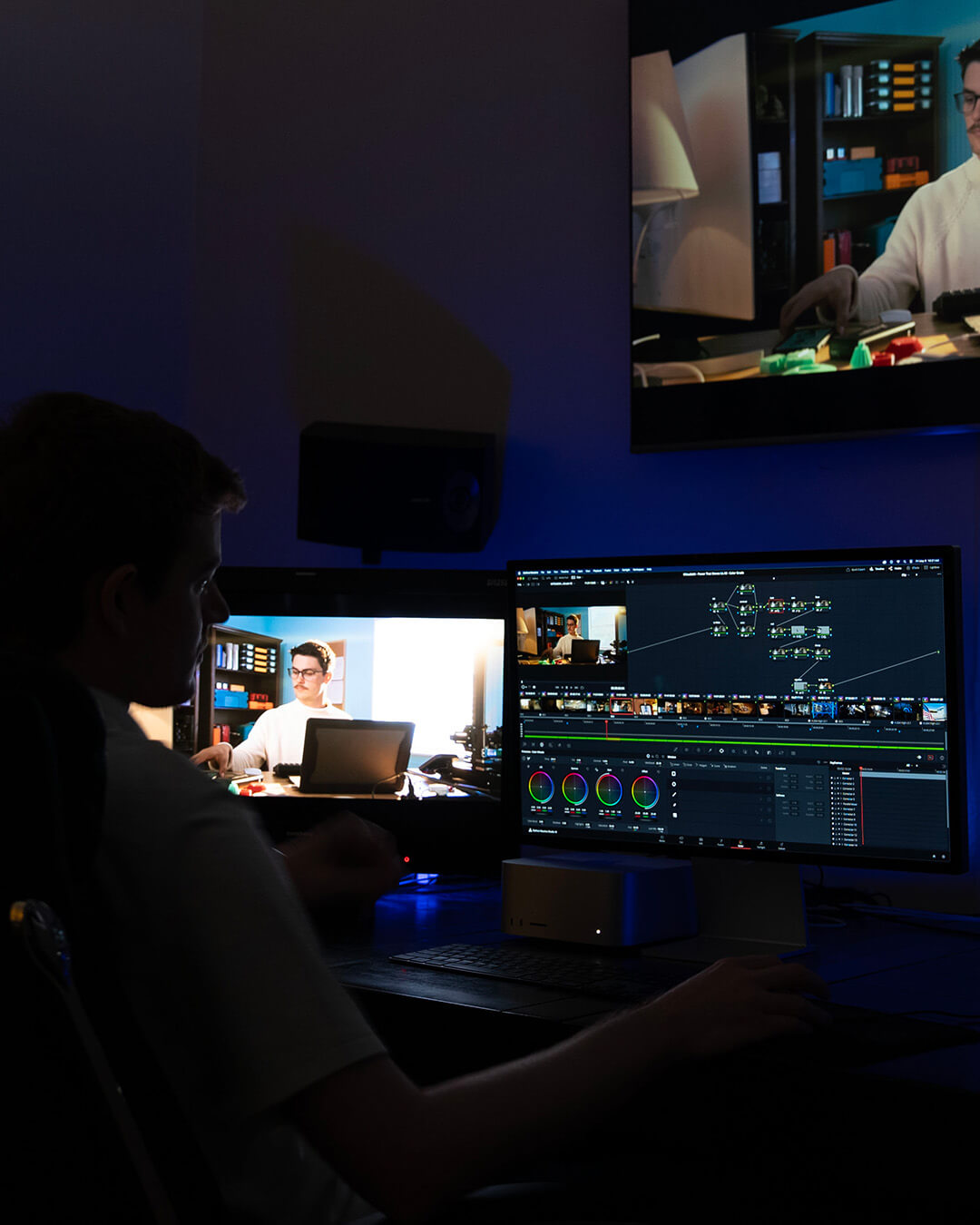
Color correction and color grading are important parts of professional video post-production.
Color correction is the technical process of adjusting exposure, white balance, contrast, and color consistency between shots. This is especially important when footage is captured across multiple cameras, lighting setups, or filming locations.
Color grading takes the process a step further by establishing the overall visual style and mood of the video. Adjustments to color, contrast, and saturation help create a cohesive look that supports the creative direction and brand identity.
For commercial productions, maintaining visual consistency helps ensure products, environments, and people are represented accurately and professionally. A cohesive color treatment also helps different scenes feel like parts of the same finished piece.
Motion Graphics, Animation, and Visual Effects
Graphics and visual effects help communicate information that may be difficult to convey through footage alone.
Depending on the project, post-production may include:
- Animated logos and branded graphics.
- Lower thirds and on-screen identification.
- Animated text, titles, and captions.
- Product features and callouts.
- Infographics and data visualizations.
- Screen replacements and visual cleanup.
- Compositing and other visual effects.
- Animated transitions and visual enhancements.
These elements are particularly useful in commercials, product videos, corporate communications, and social media content. For example, an animated product callout can highlight a specific feature, while motion graphics can simplify technical information or make statistics easier to understand. Graphics should always serve a purpose. The goal is to reinforce the message and complement the footage rather than distract viewers from the story.
Skystorm’s post-production workflow brings editing, color, sound, graphics, and finishing together through a collaborative process. This allows clients to evaluate creative decisions in the context of the complete video rather than treating each element as a separate task.
Creating Multiple Versions for Different Platforms
Adapting Video Content for Television and Digital Distribution
One of the most important considerations in commercial video post-production is understanding where the finished content will be distributed. Unlike a feature film intended primarily for theatrical presentation, commercials and marketing videos often need to reach audiences across multiple platforms. A single production may generate several deliverables, each with different specifications, runtimes, and creative requirements.
For example, a commercial production might include:
- A 30-second television commercial.
- A 15-second cutdown for digital advertising.
- A longer version for a company website or YouTube.
- Vertical edits for Instagram Reels and TikTok.
- Short promotional clips for paid and organic social media.
- Alternate versions with different messaging or calls to action.
These versions are not always simple crops of the same video. Different platforms have different viewing habits and audience expectations. A television commercial may follow a traditional narrative structure, while a social media edit may need to establish its message within the first few seconds.
Aspect ratio is another important consideration. Television and many traditional video placements use a horizontal 16:9 format, while platforms like TikTok and Instagram Reels typically favor vertical 9:16 content. Square formats and other dimensions may also be required depending on the campaign.
Planning these deliverables during pre-production helps ensure footage is captured with enough flexibility to support different crops, graphics, and editing approaches.
Preparing Files for Final Delivery
Once all versions are approved, the post-production team prepares the finished videos for distribution.
Different platforms and broadcast outlets have their own technical requirements for resolution, frame rate, file format, audio levels, and compression. Delivering a video that meets these specifications helps maintain playback quality and prevents technical issues during distribution.
Captions and subtitles may also be required or recommended, particularly for social media videos that are frequently watched without sound. Additional versions may include alternate languages, updated promotional information, or different calls to action.
The final delivery package should reflect the client’s distribution plan rather than relying on a one-size-fits-all export.
Quality Control and Project Asset Management
Reviewing the Final Video
Before a video is delivered, it should go through a final quality control review.
This process involves watching the finished video from beginning to end to identify technical errors, visual inconsistencies, and potential issues that may have been overlooked during editing.
A final quality control checklist may include:
- Confirming the correct video version and runtime.
- Checking for missing footage, black frames, or visual glitches.
- Verifying dialogue, music, and sound effect levels.
- Checking spelling, graphics, logos, and on-screen messaging.
- Confirming captions and subtitles are accurate and synchronized.
- Reviewing aspect ratios and framing for each platform.
- Verifying resolution, frame rate, and export specifications.
- Confirming that all music and visual assets are properly licensed.
These final checks help ensure the finished video represents the brand professionally and is ready for its intended audience.
Organizing and Protecting Project Files
Proper asset management is another important part of post-production. Video projects can involve large amounts of footage, audio recordings, graphics, project files, and final exports.
Organizing these assets with consistent file names and folder structures makes it easier to locate materials, manage revisions, and create additional versions when needed.
Maintaining project files and original media can also be valuable when a client needs to update a commercial, replace outdated information, create a new social media edit, or repurpose existing footage for a future campaign.
A well-organized post-production workflow helps protect the investment made during production while making future content updates more efficient.
Post-Production Timelines and Workflow Best Practices
Post-production timelines vary depending on the type of video, the amount of footage, the number of deliverables, and the complexity of the creative requirements.
A straightforward social media edit may take only a few days, while a television commercial or larger branded content campaign may require several weeks of editing, reviews, revisions, graphics, audio finishing, and final approvals.
The number of versions also affects the timeline. A campaign that requires multiple aspect ratios, different runtimes, alternate messaging, and platform-specific edits will naturally involve more post-production work than a single finished video.
Several best practices can help keep the process organized and efficient:
1. Establish deliverables before production begins. Knowing where the video will be distributed, what formats are required, and how many versions are needed allows the production team to plan footage and resources accordingly.
2. Establish a clear review and approval process. Identify who will provide feedback, how revisions will be submitted, and who has final approval. Consolidated feedback helps prevent conflicting changes and unnecessary delays.
3. Prioritize the edit before detailed finishing. Focus early reviews on the story, structure, and messaging. Once the creative direction is approved, the team can move forward with final color, audio, graphics, and other finishing work.
4. Account for revisions and final quality control. Build time into the schedule for client feedback, requested changes, and technical reviews before the final delivery deadline.
5. Plan for future content needs. Consider whether footage might be repurposed for additional campaigns, social media posts, or updated marketing materials. Capturing and organizing assets with those possibilities in mind can create long-term value.
When these steps are considered early, post-production becomes a more predictable and collaborative process.
Choosing the Right Video Post-Production Partner
Choosing a post-production partner means finding a team that understands both the creative goals of a project and the technical requirements of delivering finished content.
An experienced video production company should be able to guide clients through the editing process, provide creative input, manage revisions, and deliver content that meets the needs of its intended audience and distribution platforms.
Involving the post-production team during pre-production can also make a significant difference. Understanding the intended deliverables before filming begins allows the team to recommend capture formats, framing considerations, audio requirements, and other production decisions that can make editing and finishing more efficient.
By connecting production and post-production from the beginning, Skystorm helps clients maintain creative continuity, reduce unnecessary handoffs, and create content that is ready for the platforms where their audiences are watching.
Ready to Bring Your Vision to Life?
From a 30-second commercial to a series of social media videos, post-production is where the creative elements of a project come together to deliver a finished product.
The video post-production process involves countless creative and technical decisions, each contributing to how the final content looks, sounds, and communicates its message.
At Skystorm Productions, we believe great post-production starts with understanding the bigger picture. Whether you need a television commercial, branded video, corporate production, or a collection of social media assets, our team can help bring your project together from the first edit to final delivery.